
Composition, diversity, and vegetation signals of the Eocene Río Pichileufú flora (northwestern Patagonia, Argentina), spore-pollen evidence
DOI:
https://doi.org/10.5710/Keywords:
Palynology, Río Negro province, Middle Eocene, Vegetation, AsteraceaeAbstract
The middle Eocene Río Pichileufú locality (47.7 Ma, Huitrera Formation, Río Negro Province, Argentina) preserves one of the most
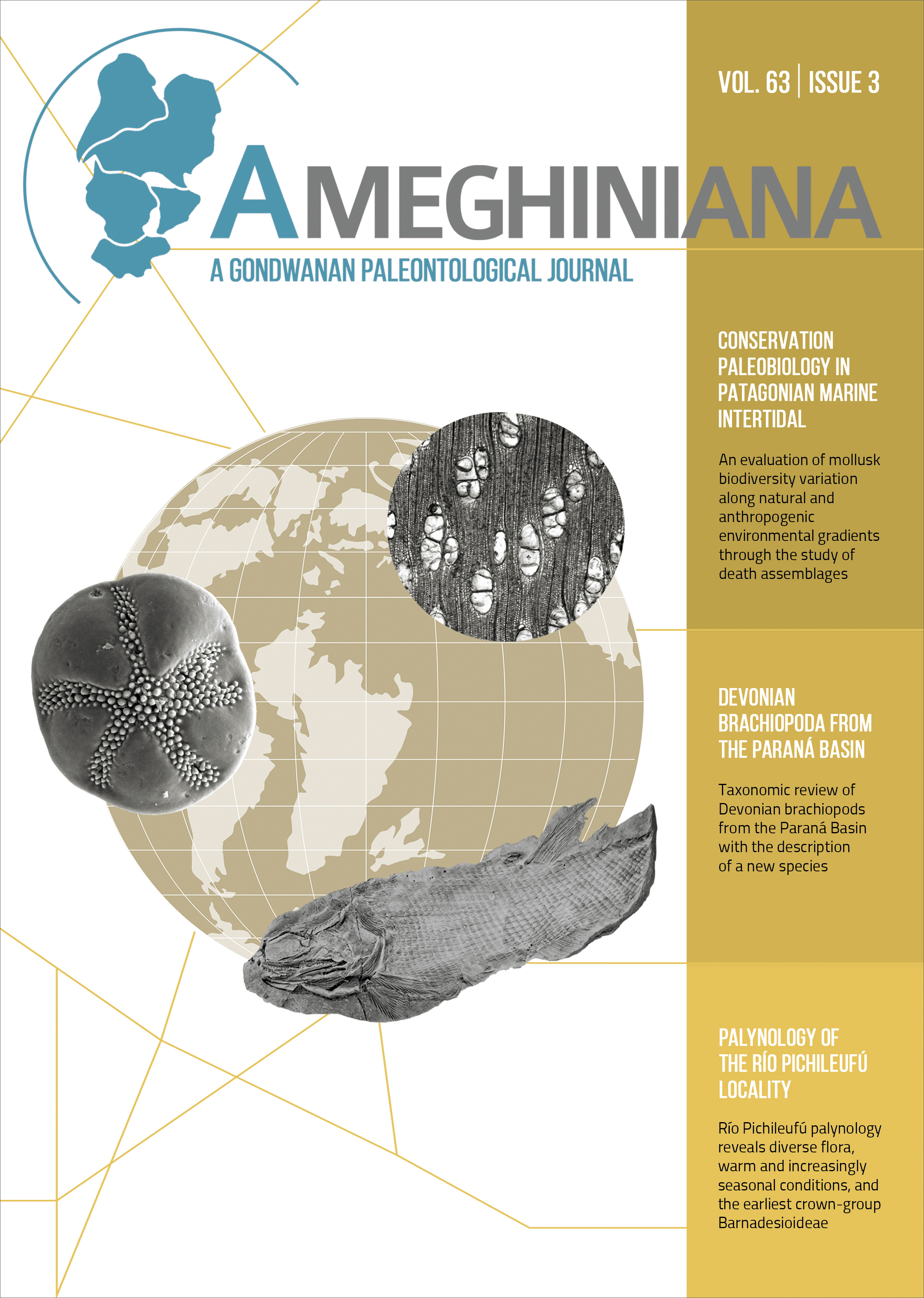
diverse and biogeographically significant fossil floras of the southern hemisphere. This study presents the first comprehensive palynological analysis from the site, identifying 69 spore and pollen species representing 33 plant families, including 19 newly recorded for the locality. The palynological assemblage is dominated by gymnosperms, chiefly Podocarpaceae, and by Nothofagaceae among angiosperms, accompanied by typical Gondwanan elements such as Araucariaceae, Myrtaceae, and Proteaceae. The presence of thermophilic taxa, including palms and Sapindaceae (Cupania), indicates warm depositional conditions, whereas the scarcity of ferns suggests seasonally dry intervals. A key finding is the fossil pollen record of Barnadesioideae (Asteraceae), representing the earliest confirmed occurrence of this crown-group lineage. Previously, Asteraceae at Río Pichileufú were known from a unique inflorescence and associated pollen related to the Mutisioideae/Dicomeae/Oldenburgieae groups. The new evidence extends the evolutionary history of the family and demonstrates that diversification of Barnadesioideae was already underway in southern South America immediately following the Eocene Climatic Optimum. The Río Pichileufú assemblage thus offers critical evidence for the early Gondwanan diversification of the Asteraceae and records a major floristic transition in Patagonian mesothermal forests, from persistently humid conditions to increasing rainfall seasonality.
Downloads
Published
Issue
Section
License
Authors publishing in Ameghiniana have the option of making their article freely available online. Authors opting for the Open Access must pay a fee of $300 (US dollars) to cover article-processing costs and to ensure the article is made open access. Please contact the Production Team after the acceptance of your manuscript if you are interested in making your article Open Access. This option implies by default a license Creative Commons Attribution Non-Commercial-NoDerivs License (CC BY NC ND). If your funding institution requires a different licensing option please communicate this to the Production Team after the acceptance of your manusctipt.


